
Strengthening Hydraulic Systems With Advanced Hydraulic Oil Coolers
A useful overview for teams reviewing why hydraulic oil temperature control matters for equipment stability, component care, and continuous machine operation.
Read ArticleMEISON hydraulic cooling guide
The AH1012T-CA is a compact aluminum alloy plate-fin oil cooler for small and medium hydraulic systems that need 100 L/min rated flow, fan-assisted heat dissipation, and practical voltage choices for different equipment builds.
Use this page when comparing a hydraulic oil cooler for sale or reviewing Hydraulic oil cooler manufacturers for construction machinery, injection molding machines, machine tools, gearbox lubrication, and compact hydraulic power units.
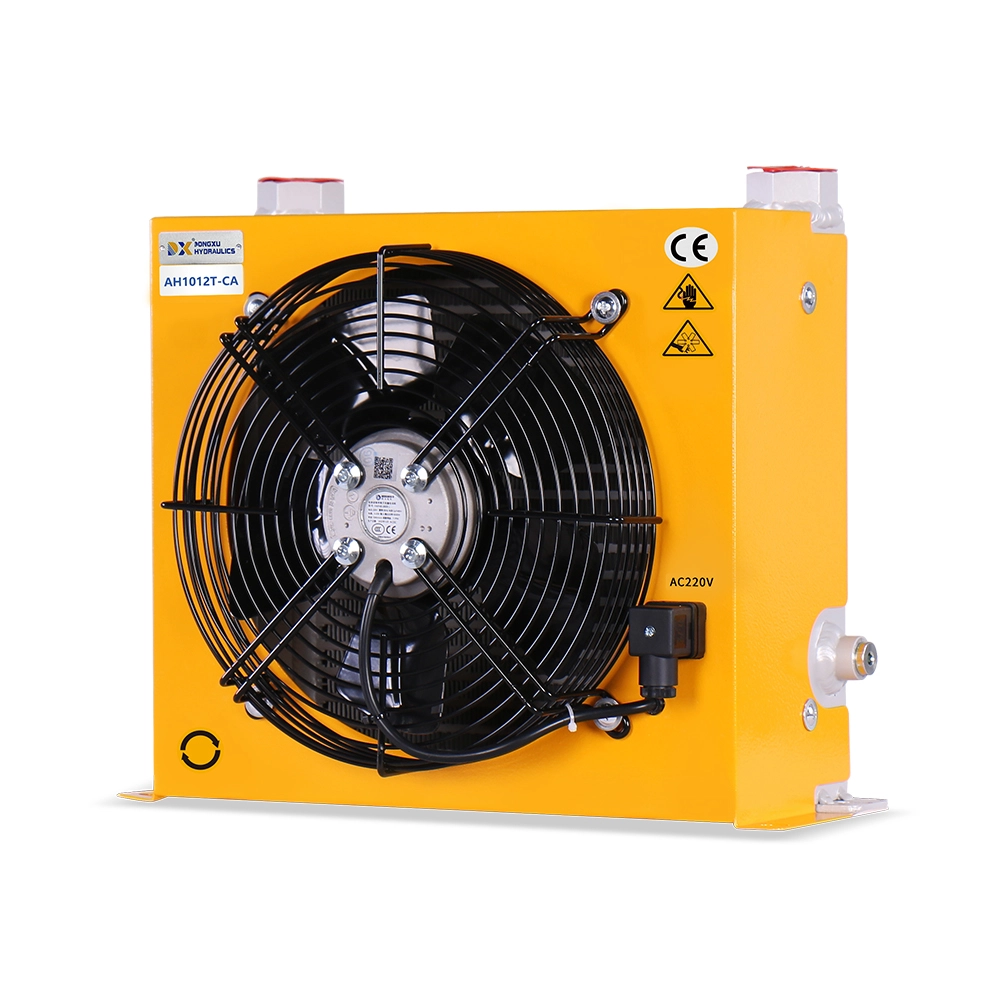

This technical selection guide summarizes the AH1012T-CA as a fan-assisted aluminum plate-fin oil cooler with a vacuum-brazed core, protective housing, G1" suggested oil port, 100 L/min rated flow, and multiple fan-voltage options for hydraulic and lubrication cooling circuits.
| Product Name | AH1012T-CA Aluminum Alloy Plate-Fin Air-Cooled Oil Cooler |
|---|---|
| Product Series | AH Series for hydraulic and lubrication use |
| Model Number | AH1012T-CA |
| Rated Flow | 100 L/min |
| Maximum Working Pressure | Less than or equal to 2.0 MPa |
| Suggested Oil Port | G1" |
| Fan Voltage Options | AC380V, AC220V, DC12V, DC24V |
| Fan Power | 60W / 50W / 80W / 80W by voltage variant |
| Net Weight | 10 kg |
| Core Material | Aluminum alloy plate-fin core with vacuum-brazed construction |
| Warranty | 1 year listed on the product page |
| Typical Applications | Hydraulic oil cooling, lubrication oil cooling, injection molding machines, construction machinery, machine tools, gearbox cooling, small hydraulic power units |
100 L/min rated flow and 2.0 MPa maximum working pressure fit many compact hydraulic cooling layouts.
AC380V, AC220V, DC12V, and DC24V choices help match mobile, workshop, and factory power setups.
Air-cooled operation removes the need for cooling water and keeps maintenance focused on airflow and fin cleaning.
A useful overview for teams reviewing why hydraulic oil temperature control matters for equipment stability, component care, and continuous machine operation.
Read ArticleThis guide helps buyers connect flow rate, pressure, machine type, operating environment, and heat-load expectations before choosing an oil cooler.
Read ArticleA core-technology article for comparing aluminum plate-fin construction, brazed heat-exchanger design, compact size, and cooling performance considerations.
Read ArticleThe 100 L/min rating, 10 kg weight, and G1" port suggestion make the first layout review straightforward. We still confirm heat load and airflow clearance before locking the cooler into the tank design.
The air-cooled design is helpful where cooling water is inconvenient. For our molding line, the main checks are voltage, fan direction, fin-cleaning access, and whether the oil temperature target is realistic.
The protective housing and vibration-resistant aluminum core are the details we look at for mobile machinery. DC12V and DC24V options also make replacement planning easier across different equipment platforms.
Use these questions to prepare a cleaner technical inquiry and reduce model-selection back-and-forth.
The AH1012T-CA is positioned for small and medium hydraulic systems that need oil cooling at a rated flow of 100 L/min. Typical use cases include small hydraulic power units, construction machinery, injection molding machines, machine tools, and gearbox lubrication circuits.
The product page lists AC380V, AC220V, DC12V, and DC24V variants. Buyers should match the fan voltage to the machine power supply and confirm plug, wiring, and control requirements before ordering.
Confirm system flow rate, required heat dissipation, oil temperature target, ambient temperature, tank volume, working pressure, port thread, mounting space, airflow direction, and whether the selected voltage variant matches the equipment.
The product guidance recommends installation with the fan facing upward or with horizontal airflow. Avoid placing the oil port downward, keep the intake and outlet clear, and prevent hot exhaust air from recirculating back into the cooler.
If outlet air temperature rises, the inlet-to-outlet air temperature difference drops, or oil temperature stays high, the aluminum fins may need cleaning. Compressed-air backflushing or a suitable cleaning agent can help remove dust and debris.
Include equipment type, hydraulic flow, motor power, target oil temperature, ambient temperature, pressure, oil type, tank volume, available voltage, port requirement, quantity, shipping location, and any branding or fitting needs.